Investigating surface coating effects on the ice adhesion behavior of woodchips
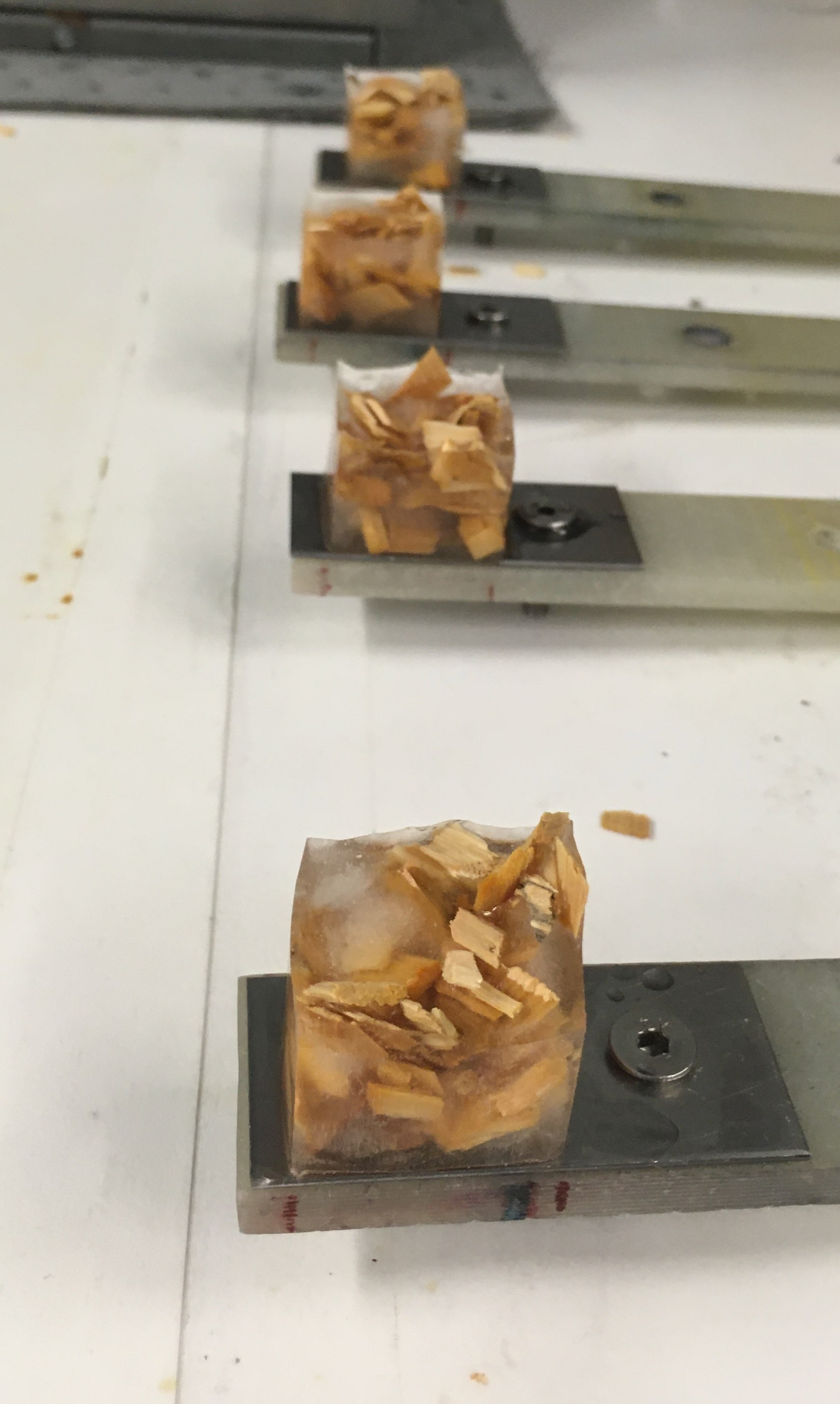
Everybody who was dared to try licking a lamp pole knows that frozen metal has a very high adhesion property. The same phenomenon occurs when forest workers load woodchips in metal container. At subzero temperatures, the moist woodchips will freeze onto the container and result in partially unloading. Several studies have been conducted to see the effect of coating in the reduction of ice adhesion, but only few checks have been made concerning the adhesion of frozen woodchips. In his report, Walser reviews and analyzes different coating materials and methods to avoid that the woodchips adhere on the walls of the containers and therefore ease the unloading. In the first part, the author is comparing different chemicals sprayed on the metal prior to the loading to prevent the freezing on the surface. Currently, forest workers use fuel oil to create a liquid layer between frozen woodchips. Same effect can be reached by using more sustainable products such as rapeseed oil, silicone oil or antifreeze. For the second part, instead of using temporary coating, more permanent solutions have been tried. Eventually, a lower ice adhesion results from the following: replacing metal container with composite container or using polyethylene lining, and permanent flame spray coating using different methods.
The evaluations made at the Tampere University's Ice Laboratory on those temporary coating, polymer materials and permanent coating by centrifuge adhesion tests allow to measure a significant reduction of ice adhesion.
Walser, J. M. J. X., 2021. Investigating surface coating effects on the ice adhesion behavior of woodchips, Vaasa: To be published.